What is Thai Massage?
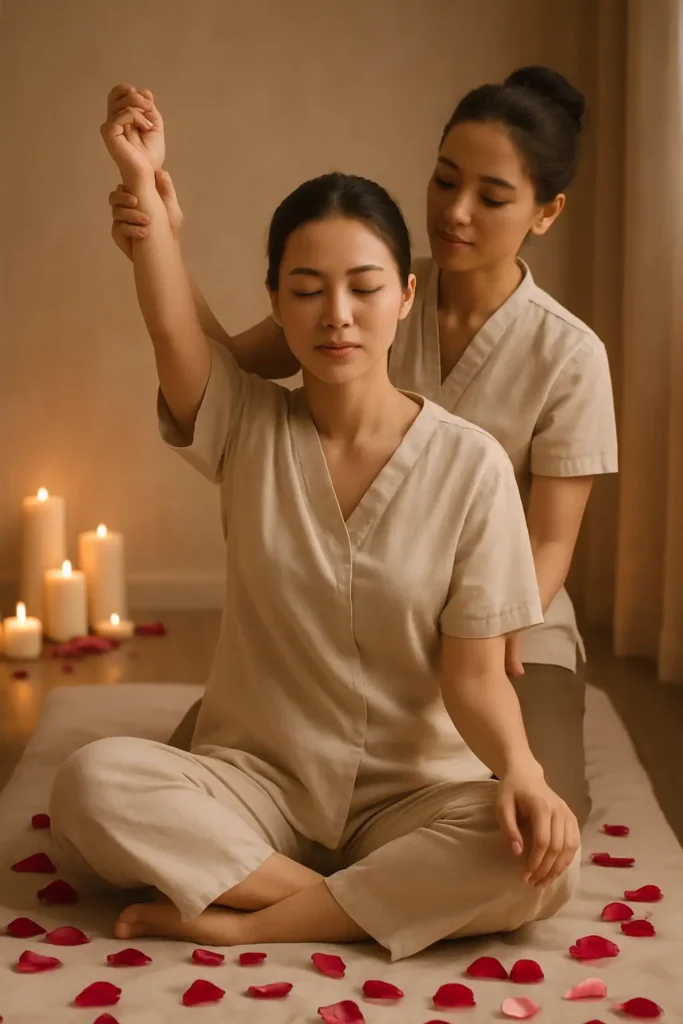
Known in its origin as Nuad Phaen Boran, Thai massage is a graceful blend of ancient healing, conscious breathing, and rhythmic movement. Unlike traditional massages, it’s performed on a floor mat, with the body fully clothed and no oils involved. It’s both grounding and deeply energizing.
Where does it come from?
Rooted in Thai tradition for over 2,500 years, this technique was developed by Jivaka Kumar Bhaccha, a revered figure in holistic medicine and contemporary of Buddha. It draws influence from Indian Ayurveda and Chinese energy medicine.
How is it performed?
The therapist uses their hands, elbows, knees, and even feet to apply gentle pressure along energy pathways known as Sen lines. The body is also softly stretched through yoga-inspired movements, creating a flowing, meditative experience.
Modern adaptations
As Thai massage has traveled the world, it has embraced new forms:
- 💧 Thai Oil Massage – smoother and more relaxing
- 🧖 Thai Spa Style – perfect for luxury retreats
- 🦶 Foot Thai Massage – with reflexology focus
- 🪑 Chair Thai Massage – ideal for quick self-care moments
In modern settings, it’s often paired with soft music and calming aromas, enhancing the sensory experience.
Signature techniques
- Rhythmic palm and thumb pressure
- Assisted yoga-like stretches
- Energy line activation (Sen Sib)
- Harmonized breathwork
- Gentle joint movements
What is its purpose?
Thai massage aims to rebalance the body’s energy, release tension, restore vitality, and create a moment of true presence — where mind and body meet in harmony.
Beauty in the benefits
✨ Soothes stress and emotional fatigue
💖 Enhances blood flow and lymphatic circulation
🌿 Relieves muscle stiffness and tension
🧘♀️ Increases flexibility and posture awareness
🕊️ Invites calm, clarity, and inner stillness
When to avoid it
As nourishing as it is, Thai massage isn’t suitable for everyone. It’s best to avoid it if you:
🚫 Are in early pregnancy
🚫 Have recent injuries or fractures
🚫 Live with severe osteoporosis or heart conditions
🚫 Are experiencing fever or inflammation
A gentle invitation
More than just a treatment, Thai massage is a ritual of self-love and reconnection. It invites you to slow down, breathe deeply, and come home to your body.
🌸 Let this ancient art soften your day — you deserve it.